
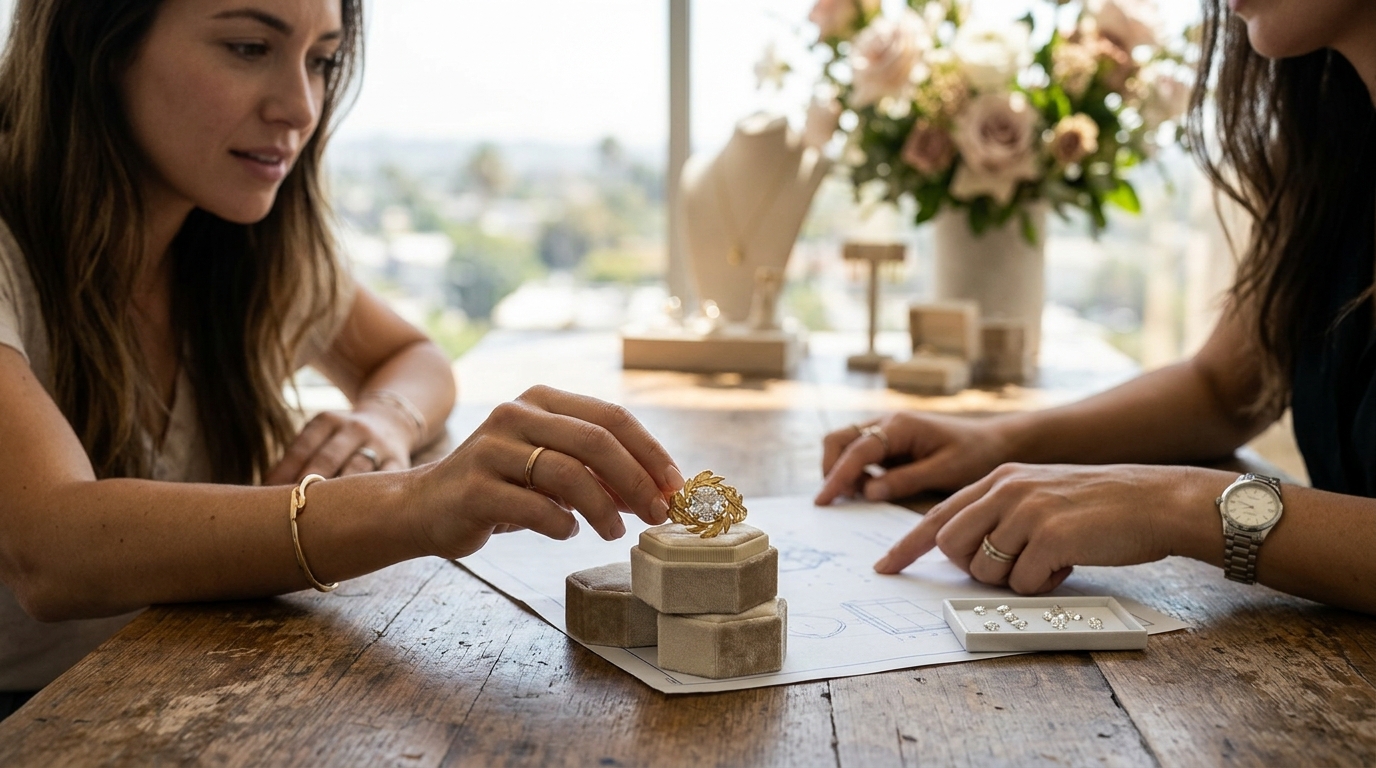
Designing a custom floral engagement ring involves balancing artistic vision with financial reality. The final price is determined by the complexity of the metalwork, the quality of the stones, and the labor required to handcraft the piece. Understanding these variables helps you allocate your budget effectively while ensuring the ring meets your aesthetic goals.
1. Precious Metal Selection and Purity
The type and purity of the metal form the base cost of your ring. Precious metals like platinum, palladium, and gold vary significantly in price per gram. Higher karat golds, such as 18k, contain more pure metal than 14k, which increases the material cost. Additionally, the total weight of the metal used in a floral design, which often features intricate petals and leaves, can be higher than in simpler bands.
2. Center Stone Quality and Origin
The 4Cs of the center diamond dictate a large portion of the total price. Carat weight, cut, color, and clarity are the primary drivers of diamond value. You must also decide between earth-mined and lab-grown diamonds, as lab-grown options typically offer lower prices for the same visual quality. The specific shape of the center stone, such as a round brilliant or a fancy cut, also influences the final cost.
3. Accent Stone Quantity and Setting
The number and setting style of accent stones add significant detail and cost. Floral rings often feature pave or micro-pave diamonds encircling the petals to enhance sparkle. The total carat weight of these accent stones, often referred to as total carat weight or ctw, directly impacts the price. More intricate settings that require individual prongs for each small stone increase labor time and cost.
4. Design Complexity and Handcrafting
Intricate floral patterns require advanced handcrafting techniques that increase labor costs. Unlike mass-produced rings, custom floral designs involve hand engraving, embossing, and detailed metalwork to create realistic petals and leaves. Techniques such as raised metal embossing or etched carvings require master jewelers with decades of experience. The more complex the design, the more time is spent at the bench, which is reflected in the final price.
5. Level of Customization and Bespoke Elements
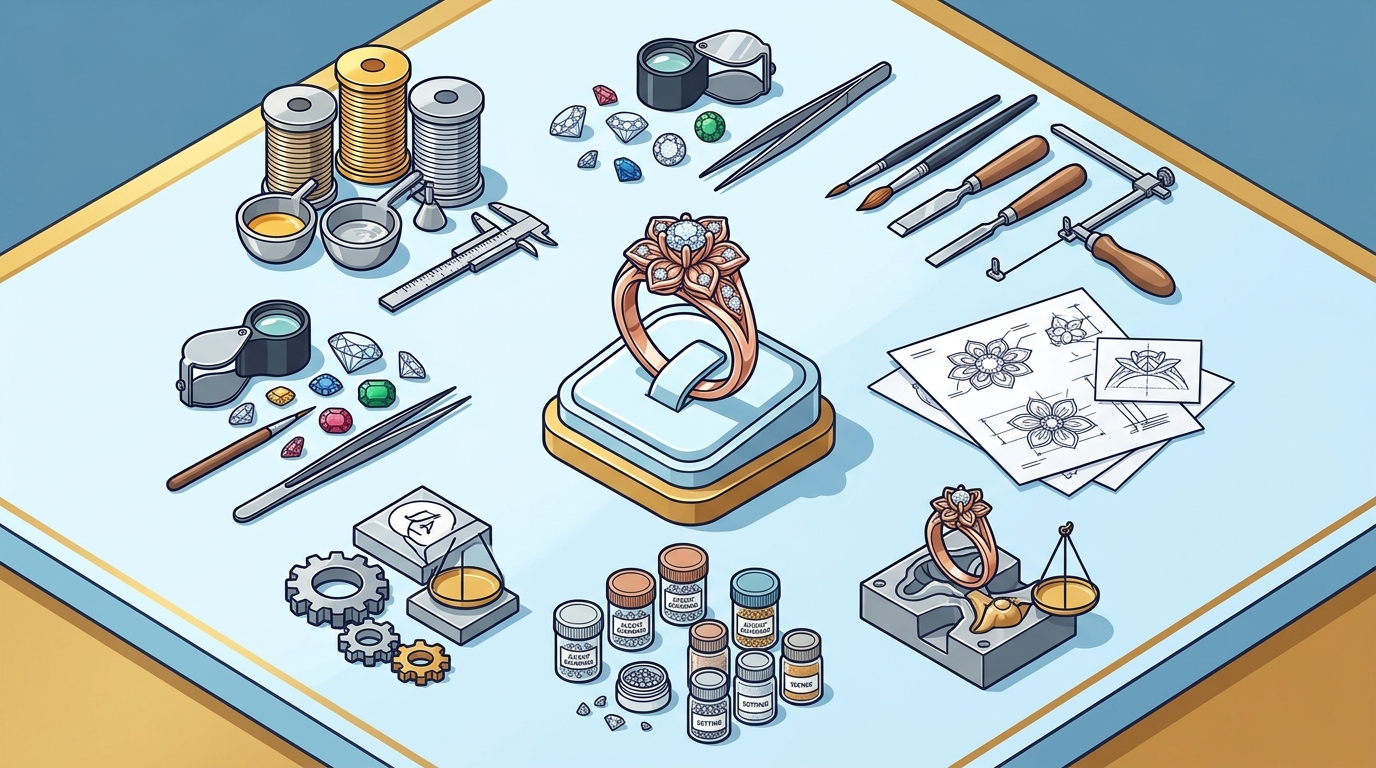
Modifying an existing design or creating a fully bespoke piece affects the price. Choosing a standard design from a catalog is generally less expensive than altering it to fit specific preferences. If you request unique changes, such as two-tone gold petals or specific gemstone inlays, the jeweler must create new molds or adjust the design from scratch. This bespoke process ensures the ring is one-of-a-kind but requires additional design and manufacturing time.
6. Band Width and Profile
The width and thickness of the band influence both material usage and comfort. Wider bands use more metal, increasing the base cost. The profile of the ring, whether it is low-profile for daily wear or a high-profile statement piece, also affects the amount of material needed. Floral designs often have varying band widths to mimic the natural shape of a flower stem, which requires precise metal distribution.
7. Finishing Techniques and Surface Detail
Surface finishes like milgrain, polishing, and texturing add to the final cost. Detailed finishing techniques, such as intrinsic milgrain detailing on petal edges, require specialized tools and skilled hands. The choice between a high polish, matte finish, or mixed textures can change the aesthetic and the labor involved. These finishing touches are what give handcrafted floral rings their unique, organic feel.
Choosing the Right Balance
To manage costs, prioritize the elements that matter most to you. If the center stone is the focal point, you might choose a simpler band design to keep the budget in check. Conversely, if the floral metalwork is the star, you can select a smaller or lab-grown center stone. Consulting with a designer allows you to see how different combinations affect the final price and aesthetic.
Frequently Asked Questions
Is a custom floral ring more expensive than a standard solitaire?
Generally, yes. Custom floral rings involve more complex metalwork and often more accent stones, which increases labor and material costs compared to a simple solitaire setting.
Can I customize the metal colors in a floral ring?
Yes, many designers offer two-tone options, such as rose gold inner petals and white gold outer petals. This customization adds to the cost but creates a unique visual effect.
Do lab-grown diamonds look the same as mined diamonds?
Visually, lab-grown and earth-mined diamonds are identical. The difference lies in their origin and price, with lab-grown options typically being more affordable for the same quality.
How long does it take to make a custom floral ring?
Handcrafting a custom ring can take several weeks to months, depending on the complexity of the design and the jeweler's current workload. Patience is often required for high-quality bespoke pieces.
What is the most expensive part of a floral ring?
The center diamond is usually the most expensive component, followed by the labor involved in handcrafting the intricate floral metalwork.
Next Steps
Ready to start designing your unique piece? Explore the custom engagement rings collection or learn how to order from Blooming Beauty Ring to begin your journey.