
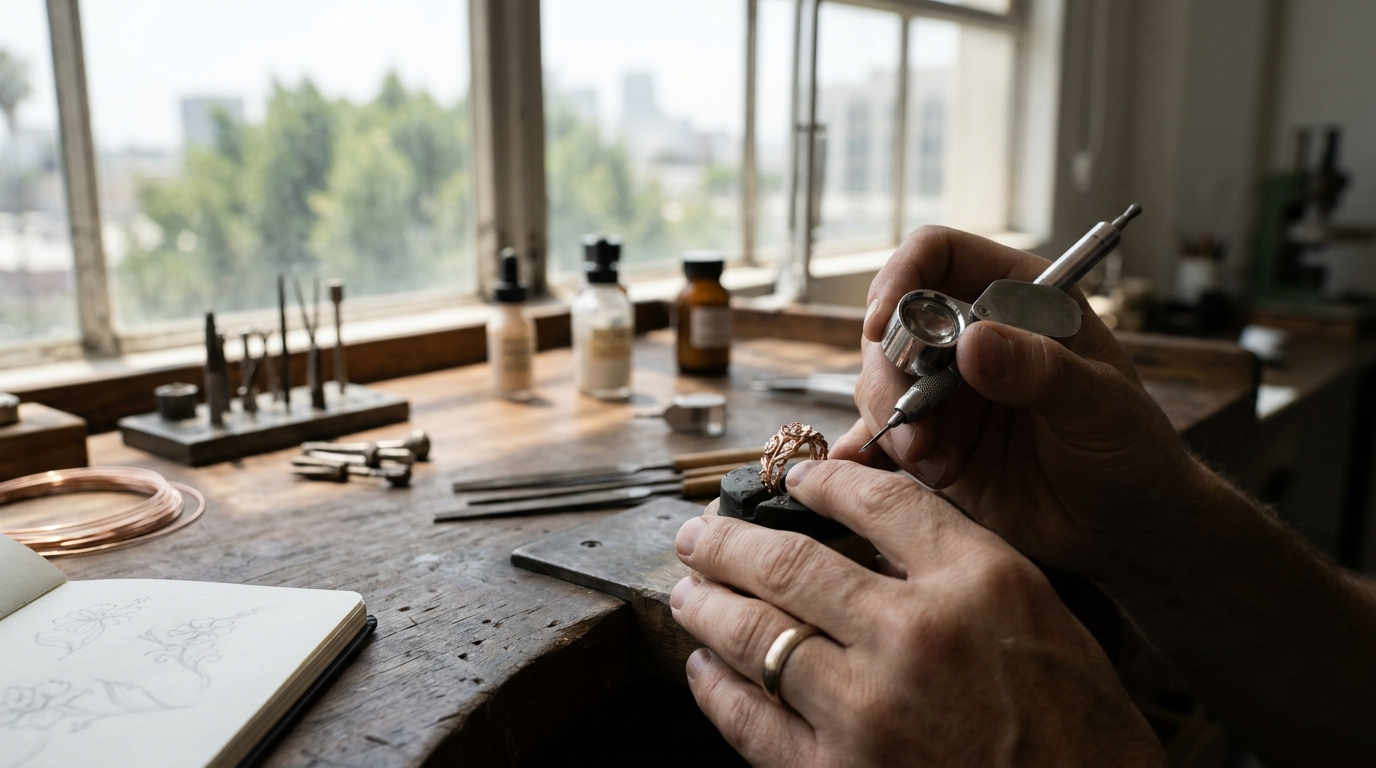
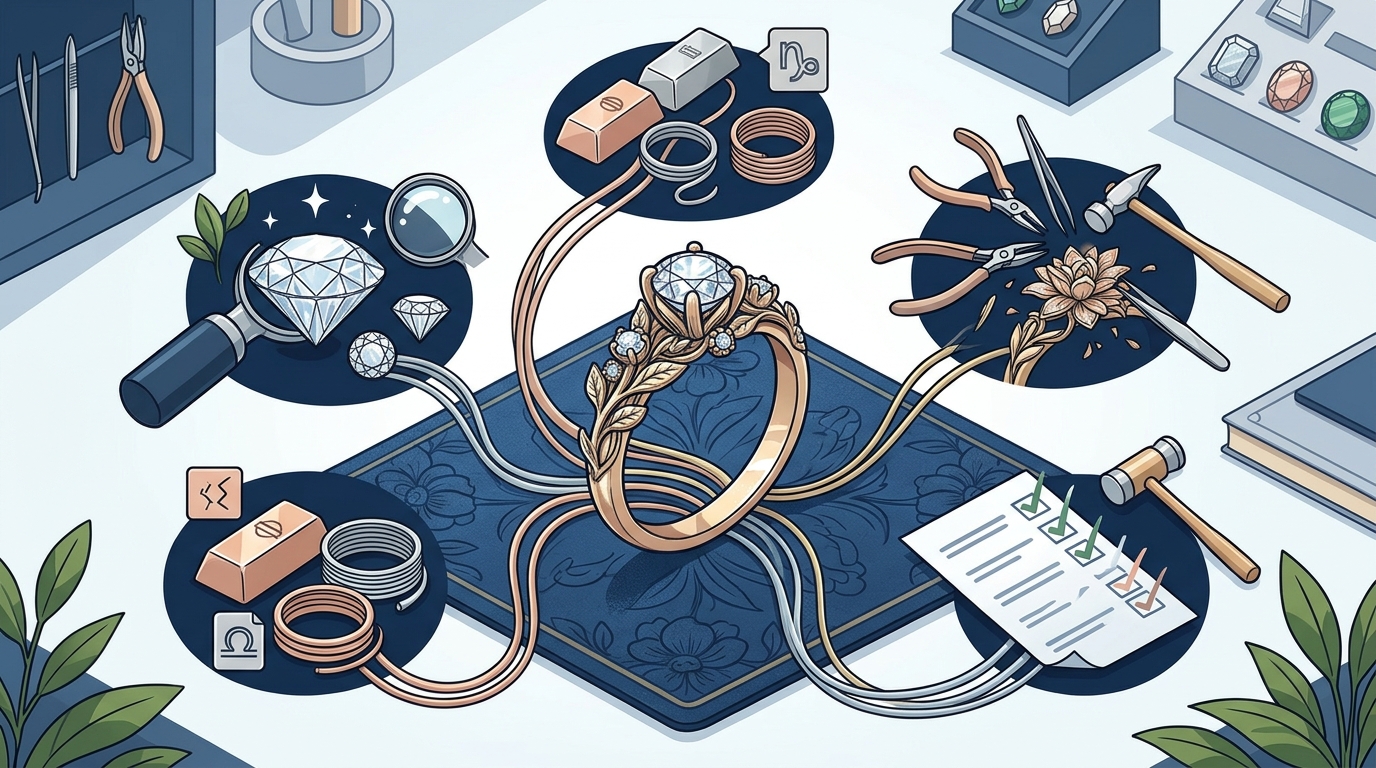
The cost of nature-inspired engagement rings is primarily driven by the complexity of handcrafting, the quality of the center diamond, and the choice of precious metals. Unlike mass-produced jewelry, floral and botanical designs require significant artisan labor and specialized techniques. These elements combine to create a price that reflects both material value and artistic skill.
The Impact of Handcrafted Artistry
Handcrafted jewelry is a product of skilled labor rather than automated manufacturing. When a ring features intricate details like blooming petals or leafy textures, the time required to create it increases significantly. This labor cost is a major component of the final price. At Blooming Beauty Ring, master jewelers create each custom engagement ring setting one at a time, specifically tailored to each customer's desire. This bespoke approach ensures superior quality but naturally commands a higher price point than factory-made alternatives.
Complexity of Design
Designs that mimic organic forms, such as the Blooming Rose Engagement Ring Collection, often involve raised metal embossing and etched carvings. These techniques require precision and experience. The more detailed the engraving or the number of individual petals, the more hours a jeweler must spend on the piece. This direct correlation between time and complexity is a primary driver of cost.
Diamond Quality and the 4Cs
Diamond quality is the most significant variable in engagement ring pricing. The 4Cs (Carat, Cut, Color, and Clarity) determine the value of the center stone. A larger carat weight generally increases the price exponentially, not linearly. However, cut quality is often the most important factor for visual appeal. A well-cut diamond reflects light better, making it appear more brilliant and potentially larger than a poorly cut stone of the same weight.
Clarity and Color Considerations
Clarity refers to the presence of internal inclusions. While Flawless diamonds are the most expensive, many buyers find that VS1 or VS2 clarity grades offer the best balance of value and beauty. Similarly, color grades from D to Z affect price, with colorless diamonds commanding a premium. Understanding these grades helps buyers allocate their budget effectively. For detailed insights, you can review our Diamond and Engagement Ring Education resources.
Precious Metal Selection
The type of metal used in the setting significantly influences the ring's cost. Platinum is generally the most expensive option due to its density and purity. Gold, available in 14K and 18K, offers a range of prices depending on the karat purity and current market rates. Palladium is another option that is often more affordable than platinum but heavier than gold. The choice of metal also affects the ring's durability and maintenance needs over time.
Two-Tone and Mixed Metals
Using multiple metals in a single ring, such as a two-tone design with white and rose gold, can add to the complexity and cost. This technique requires careful soldering and finishing to ensure a seamless transition between metals. It adds an artistic layer to the design that standard single-metal rings do not have. This customization is a hallmark of high-end bespoke jewelry.
Accent Stones and Setting Styles
The inclusion of accent diamonds or gemstones around the center stone adds to the total carat weight and cost. Pave and micro-pave settings, which feature many small diamonds, can significantly increase the price due to the labor involved in setting each tiny stone. Channel set engagement rings offer a secure method for mounting accent diamonds, which can be both beautiful and durable. The style of the setting, whether it is a halo, cathedral, or split shank, also affects the amount of metal and stone required.
Secure Mounting Techniques
Some settings, like tension or bezel, require different engineering approaches. Tension settings, for example, hold the diamond in place with the pressure of the metal band itself. This requires precise manufacturing and high-quality metal. These specialized techniques contribute to the overall cost but offer unique aesthetic and functional benefits.
Customization and Bespoke Services
Material Substitutions
Choosing alternative materials, such as lab-grown diamonds or different gemstones, can lower the cost while maintaining the design's aesthetic. Lab-grown diamonds are chemically identical to earth-mined diamonds but are typically more affordable. This option allows buyers to achieve a larger or higher-quality center stone within their budget. It is a popular choice for those who prioritize value and sustainability.
Key Takeaways
- Handcrafted labor is a major cost driver for nature-inspired rings due to the time and skill required.
- Diamond cut quality has a greater impact on visual appeal than carat weight alone.
- Platinum is the most expensive metal, while gold and palladium offer different price points.
- Pave and micro-pave settings increase cost due to the labor of setting many small stones.
- Custom design work adds to the price but ensures a unique, personalized piece.
- Lab-grown diamonds provide a cost-effective alternative to earth-mined stones.
Frequently Asked Questions
Why are handcrafted rings more expensive than mass-produced ones?
Handcrafted rings require significant time and skill from master jewelers. Each piece is made individually, which increases labor costs compared to automated factory production.
Does the metal type affect the ring's price?
Yes, the type of metal significantly affects the price. Platinum is generally the most expensive, followed by 18K gold, 14K gold, and palladium.
What is the most important diamond factor for value?
Cut quality is often the most important factor for visual appeal. A well-cut diamond reflects light better, making it appear more brilliant and potentially larger.
Can I customize a nature-inspired ring design?
Yes, many jewelers offer customization services. You can modify existing designs or create a new one from scratch, which may increase the cost due to the design process.
Are lab-grown diamonds a good value option?
Lab-grown diamonds are chemically identical to earth-mined diamonds but are typically more affordable. They allow buyers to get a larger or higher-quality stone within their budget.
How does the setting style affect the price?
The setting style affects the amount of metal and accent stones required. Complex settings like pave or tension mounts require more labor and precision, increasing the cost.
Conclusion
Understanding the factors that affect the cost of nature-inspired engagement rings helps you make an informed decision. By considering craftsmanship, diamond quality, metal choice, and customization, you can find a ring that fits your budget and style. to discuss your options and create a ring that is truly yours.