
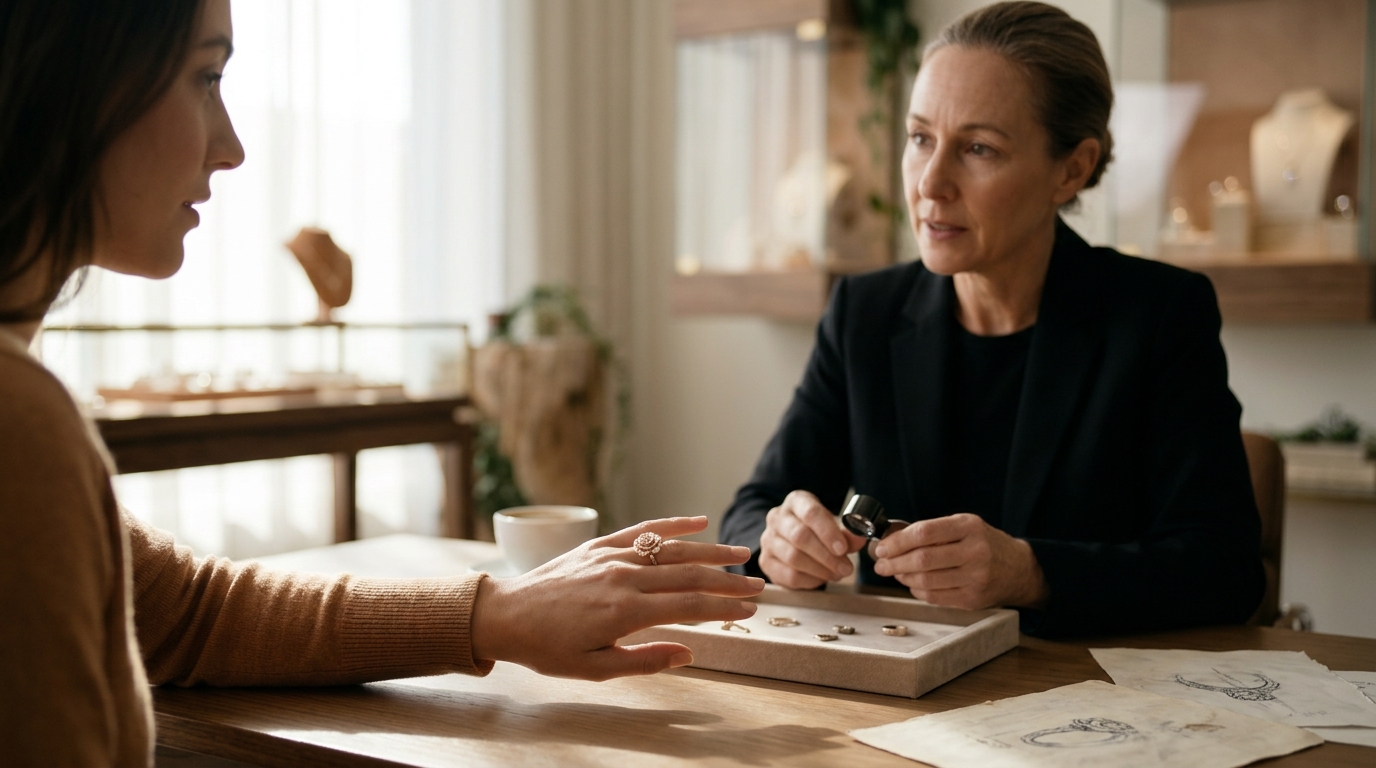
Find a rose-shaped engagement ring at specialized independent jewelers, custom design studios, or online boutiques that manufacture floral settings in-house. Blooming Beauty Ring, a Los Angeles-based manufacturer, offers handcrafted rose and lotus designs made in the USA. This guide covers rose cut diamonds, floral setting styles, metal options, and how to verify craftsmanship.
Rose Cut Diamonds
A rose cut diamond is a historical diamond cut characterized by a flat table and rounded, petal-like facets that converge at a point. Unlike modern brilliant cuts, rose cuts prioritize soft, romantic luster over intense fire. This cut is ideal for vintage-inspired floral rings because the rounded facets mimic the shape of a rose petal. When shopping for a rose-shaped ring, you can choose between a rose cut center stone or a brilliant cut diamond set in a rose-shaped metal setting. Both options deliver a floral aesthetic but with different optical properties. Rose cut diamonds are generally less expensive per carat than round brilliant cuts, allowing for larger center stones within the same budget. For additional details, review the Contact Blooming Beauty Ring.
Optical Characteristics
Rose cut diamonds exhibit a soft, velvety glow rather than the sharp sparkle of modern cuts. The facets are arranged in concentric rows, creating a dome-like profile. This shape sits lower on the finger, making it comfortable for daily wear. If your partner prefers a subtle, antique look, a rose cut center stone is the definitive choice. It pairs beautifully with milgrain detailing and pave accents. For additional details, review the Questions Submitted By Previous.
Modern Alternatives
If you want the shape of a rose but the sparkle of a modern diamond, choose a round or oval brilliant cut set in a floral setting. The metalwork creates the rose silhouette while the diamond provides maximum brilliance. This hybrid approach is popular in contemporary floral collections. It offers the best of both worlds: romantic design and modern performance. For additional details, review the About Blooming Beauty Ring.
Floral Setting Styles
Floral settings are metal structures designed to mimic the organic forms of flowers, including roses, lotus, and lilies. These settings use techniques like hand engraving, embossing, and pave work to create depth and texture. The most common floral motifs are the rose and the lotus, both of which carry deep symbolic meaning in engagement jewelry. A rose symbolizes love and passion, while a lotus represents purity and new beginnings. Understanding these styles helps you communicate your vision to a jeweler or select the right design from a catalog.
The Rose Motif
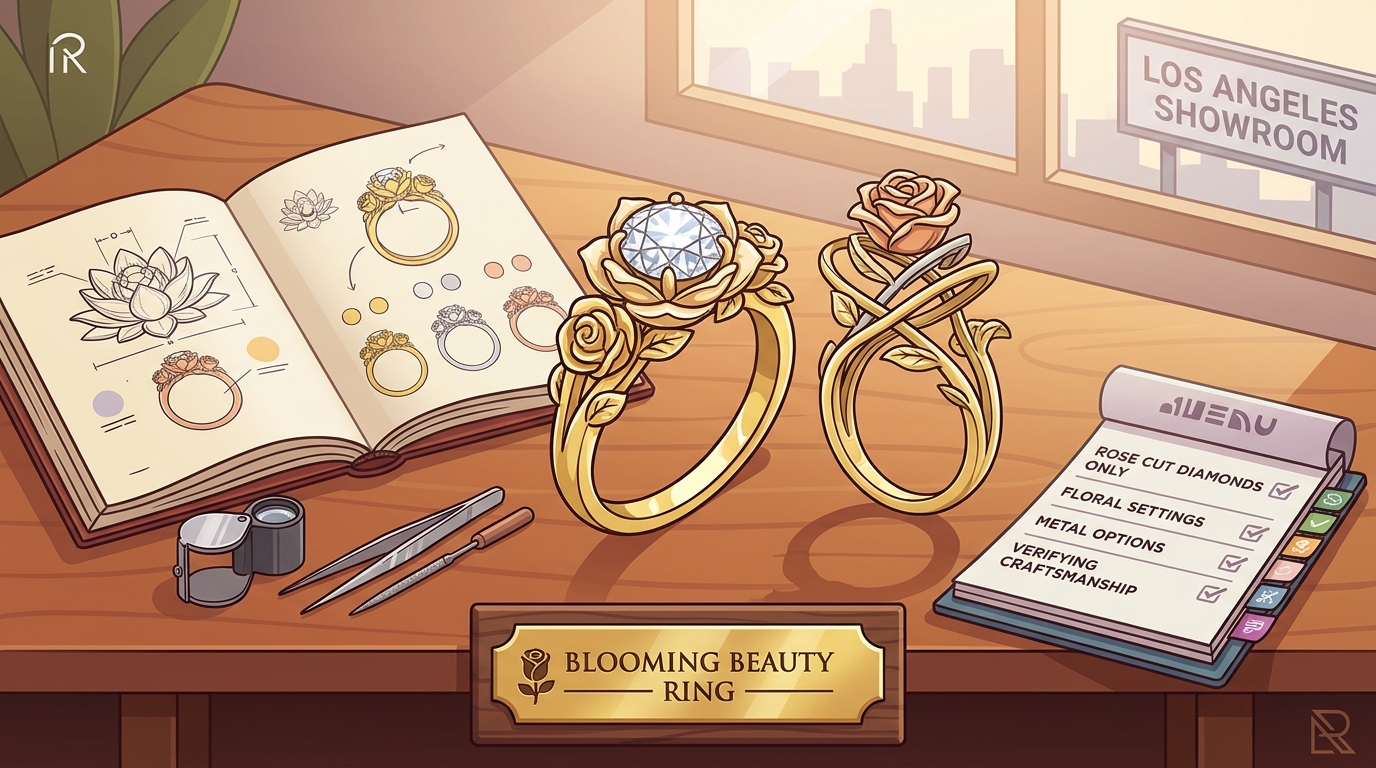
Rose-shaped rings feature layered petals that wrap around the center stone. The petals can be smooth, textured, or engraved with fine lines to simulate the natural ridges of a rose. Some designs use multiple metals to create a two-tone effect, such as rose gold petals on a white gold band. This contrast enhances the three-dimensional look of the flower. The center stone is often hidden within the bloom, creating a protective and intimate setting.
The Lotus Motif
Lotus rings feature petals that expand outward and upward, mimicking the flower's natural growth pattern. The design allows light to enter from multiple angles, enhancing the diamond's sparkle. Lotus petals are often thinner and more delicate than rose petals. This style is popular for those who prefer a spiritual or minimalist aesthetic. The open structure of a lotus setting makes the center stone more visible than in a closed rose design.
Comparison of Floral Motifs
| Motif | Symbolism | Center Stone Visibility | Best For |
|---|---|---|---|
| Rose | Love, Passion | Medium (Hidden in bloom) | Romantic, Vintage Styles |
| Lotus | Purity, New Beginnings | High (Open petals) | Modern, Spiritual Styles |
| Lily | Purity, Rebirth | Medium | Elegant, Classic Styles |
Metal and Finish Options
The metal choice significantly impacts the color, durability, and overall aesthetic of a rose-shaped engagement ring. Common options include 14K and 18K gold in white, yellow, and rose tones, as well as platinum and palladium. Rose gold is the most popular choice for floral designs because its warm pink hue complements the romantic nature of the motif. White gold and platinum provide a neutral backdrop that allows the diamond to stand out. Two-tone combinations, such as rose gold petals on a white gold band, add visual interest and depth.
Gold Alloys
14K gold is more durable and affordable, making it suitable for daily wear. 18K gold has a richer color and is softer, offering a more luxurious feel. Rose gold is an alloy of copper and gold, which gives it its distinctive pink color. The higher the copper content, the deeper the pink hue. White gold is alloyed with palladium or silver and plated with rhodium for a bright, silver-like finish. Rhodium plating may need to be renewed every few years to maintain its shine.
Platinum and Palladium
Platinum is a dense, white metal that is hypoallergenic and highly durable. It does not require plating and develops a natural patina over time. Palladium is lighter than platinum and has a similar white appearance. It is more affordable than platinum but less dense. Both metals are excellent choices for those with sensitive skin. They provide a strong, long-lasting foundation for intricate floral designs.
Customization and Sizing
Customization allows you to tailor a rose-shaped ring to your partner's unique style and finger size. Most manufacturers offer resizing services, but complex floral designs may have limitations. It is essential to know your partner's ring size before ordering. If you are unsure, you can borrow a ring they already wear and have it measured at a local jeweler. Customization options include changing the metal color, adding pave diamonds to the band, or altering the petal shape. Working with a designer ensures the ring fits perfectly and reflects your personal story.
Resizing Considerations
Floral rings with pave work or intricate engravings can be difficult to resize. Adding or removing metal may disrupt the design's symmetry. Some manufacturers offer free resizing within a certain period after purchase. Others may charge a fee for complex adjustments. It is best to confirm the resizing policy before placing your order. If your partner's size is uncertain, consider ordering a slightly larger size that can be resized down more easily than up.
Personalization Options
Personalization can include engraving a message on the inside of the band or adding a birthstone to the back of the setting. You can also choose the center stone's cut, color, and clarity to match your budget and preferences. Some jewelers offer 3D renderings to visualize the final design before production. This step helps ensure you are happy with the proportions and details. Clear communication with the designer is key to achieving the desired result.
Verifying Craftsmanship
Verifying craftsmanship ensures you are purchasing a high-quality, durable ring. Look for jewelers who provide detailed photos and videos of the actual ring, not just 3D renderings. Real-life images show the true color, texture, and sparkle of the metal and stone. Check for reviews and testimonials from previous customers. A reputable jeweler will have a strong track record of customer satisfaction. Additionally, verify the diamond's certification. A GIA or AGS certificate provides an independent assessment of the diamond's quality. This document is essential for insurance and resale value.
Quality Indicators
Examine the symmetry of the petals and the alignment of the pave stones. High-quality craftsmanship results in a balanced, harmonious design. Check the prongs holding the center stone to ensure they are secure and well-shaped. The metal should be polished smoothly without visible scratches or rough edges. A well-made ring feels comfortable on the finger and sits securely. If you are buying online, request close-up videos that show the ring from multiple angles.
Warranty and Support
Key Takeaways
- Rose cut diamonds offer a soft, romantic luster ideal for vintage floral designs.
- Floral settings like roses and lotuses carry deep symbolic meaning in engagement jewelry.
- Rose gold is the most popular metal for rose-shaped rings due to its warm hue.
- Two-tone designs add visual depth and contrast to floral motifs.
- Customization allows for personal touches like engraving and metal color changes.
- Resizing complex floral rings can be difficult, so accurate sizing is crucial.
- Verify craftsmanship by reviewing real-life photos and diamond certifications.
Frequently Asked Questions
What is a rose cut diamond?
Can I resize a floral engagement ring?
Yes, but complex designs with pave work may be difficult to resize. It is best to confirm the resizing policy with the jeweler before ordering. Accurate sizing is recommended to avoid complications.
Which metal is best for a rose-shaped ring?
How do I verify the quality of an online ring?
Look for detailed photos and videos of the actual ring. Check for diamond certifications from reputable labs like GIA. Read customer reviews and verify the jeweler's warranty policy.
What does a lotus ring symbolize?
A lotus ring symbolizes purity, grace, and new beginnings. The open petal design allows light to enter, enhancing the diamond's sparkle. It is a popular choice for spiritual or minimalist styles.
Are rose cut diamonds expensive?
Rose cut diamonds are generally less expensive per carat than round brilliant cuts. This allows for larger center stones within the same budget. They are a cost-effective option for a romantic look.
Can I customize the petal shape?
Yes, many jewelers offer customization options for petal shape, size, and texture. You can work with a designer to create a unique floral motif that reflects your personal style.
What is the difference between 14K and 18K gold?
14K gold is more durable and affordable, while 18K gold has a richer color and is softer. Choose 14K for daily wear and 18K for a more luxurious feel.